


Black Sea
Syllabus: GS1/Places in News
Context
- India strongly condemned the attack on the commercial vessel MV OMORFI in the Black Sea.
Black Sea
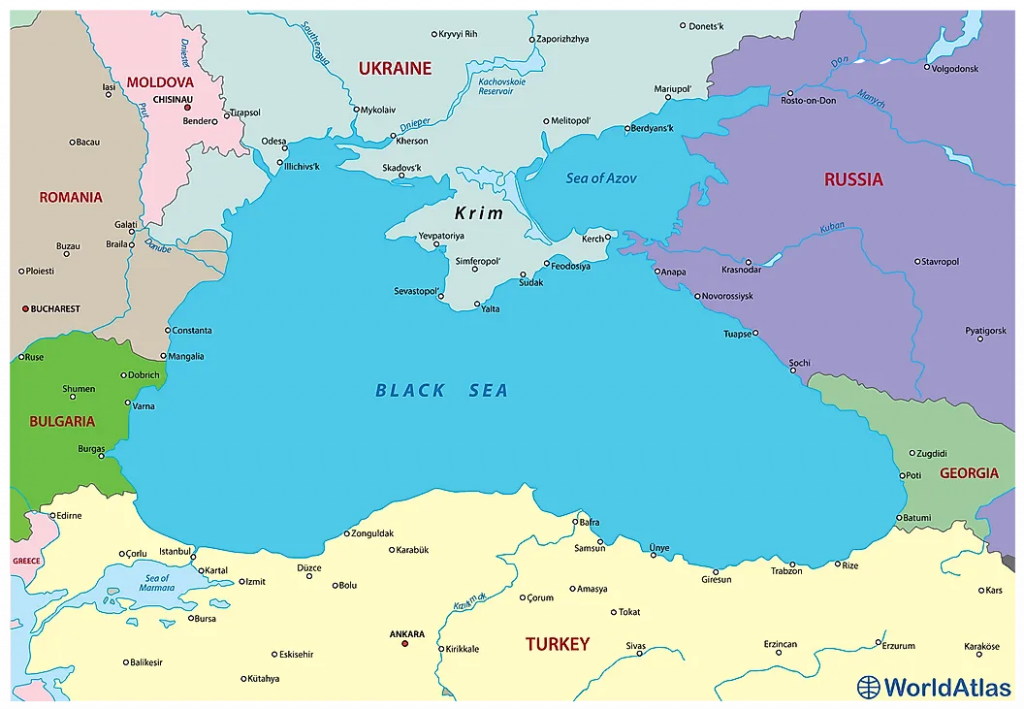
- The Black Sea is a large inland body of water located in southeastern Europe, bordered by six countries: Bulgaria, Romania, Ukraine, Russia, Georgia, and Turkey.
- It is connected to the Mediterranean Sea through the Bosporus Strait, the Sea of Marmara, and the Dardanelles Strait.
- It is the largest inland body of water and is also the largest meromictic basin, which means the movement of water between the lower and upper layers of the Sea is rare.
- The Black Sea deeper water is devoid of oxygen and rich in hydrogen sulfide, which makes it unsuitable for most marine life.
- The Black Sea does have marine life in its upper, oxygen-rich layers.
- Significance: Ports like Odessa (Ukraine), Constanta (Romania), Varna (Bulgaria), and Novorossiysk (Russia) are vital for the countries bordering the sea.
- The Black Sea is also important for fishing, energy resources (including natural gas and oil), and shipping.
- It serves as a strategic point of control for access to the Mediterranean Sea and, historically, has been the site of many conflicts.
Source: DD
UNESCO Adds West Bank, Lebanon Sites to Danger List
Syllabus: GS1/Culture
Context
- UNESCO has added Sebastia in the West Bank and five castles in Lebanon’s Mount Amel region, including Beaufort Castle, to both the World Heritage List and the List of World Heritage in Danger.
About
- The World Heritage List recognises cultural, natural and mixed heritage sites of Outstanding Universal Value.
- The List of World Heritage in Danger includes sites threatened by armed conflict, natural disasters, uncontrolled urbanisation, pollution, climate change or neglect. Its objective is to mobilise international attention and conservation support.
- The emergency inscription of these sites reflects concerns over the impact of the ongoing conflict in the Middle East on their conservation.
Sebastia
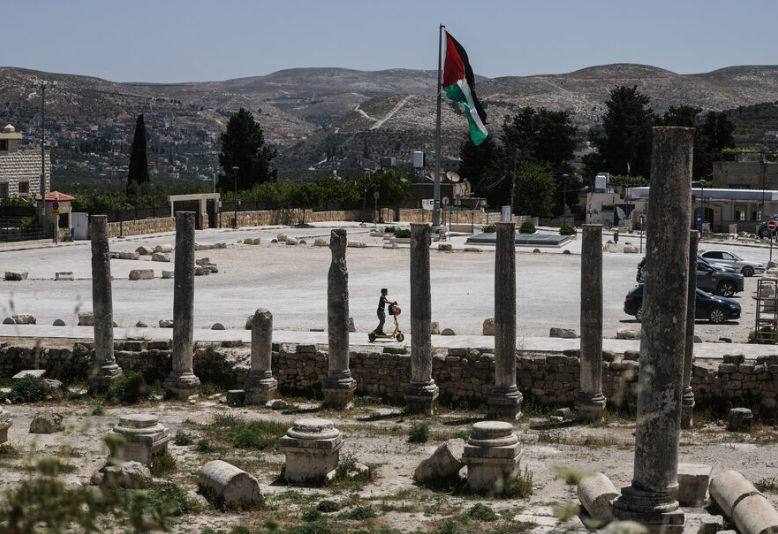
- Sebastia, located near Nablus in the West Bank, is identified with the ancient city of Samaria, the capital of the biblical Kingdom of Israel.
- Its archaeological remains span the Iron Age, Roman, Byzantine and Islamic periods, reflecting its long historical significance.
Mount Amel Castles
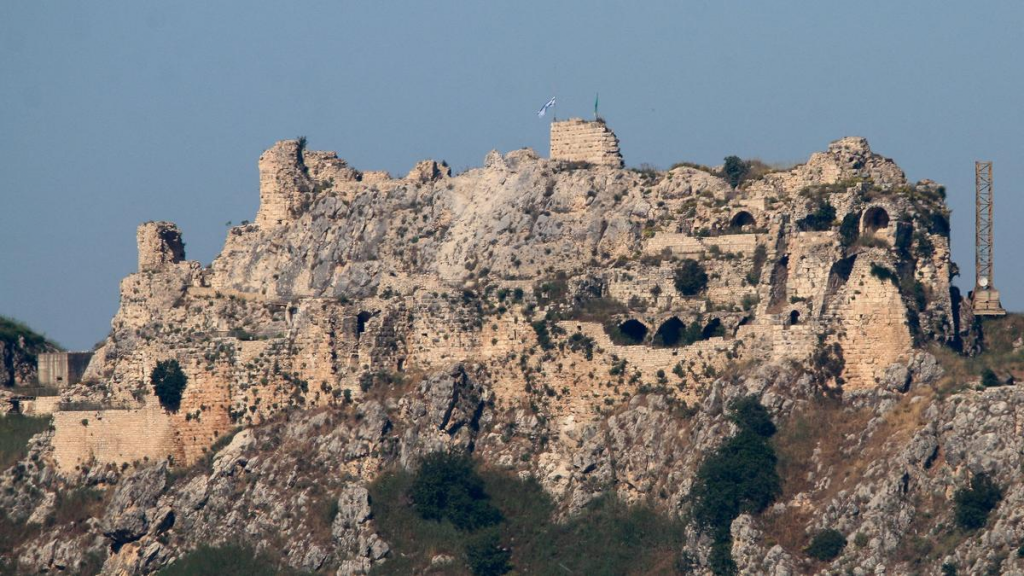
- The inscription covers five historic castles in Lebanon’s Mount Amel (Jabal Amel) region, including Beaufort Castle.
- These fortifications showcase a blend of Crusader, Ayyubid, Mamluk and local architectural traditions, illustrating nearly nine centuries of military and cultural history.
Source: DW
United Nations Commission on International Trade Law (UNCITRAL)
Syllabus: GS2/IR
In News
- The 60th anniversary of the United Nations Commission on International Trade Law (UNCITRAL) was observed.
United Nations Commission on International Trade Law (UNCITRAL)
- The United Nations Commission on International Trade Law (UNCITRAL), established in 1966.
- It is a subsidiary body of the UN General Assembly and works to modernise and harmonise international trade law.
- It convenes annually in New York and Vienna in turn to promote its work in the field of international trade law.
Membership
- It has 70 member States, elected by the UN General Assembly for six-year terms, with half the membership renewed every three years.
- It has grown from 29 members in 1966 to 70 in 2022 and its membership is balanced to reflect the world’s various geographical regions and major economic and legal systems.
- India is a member of the United Nations Commission on International Trade Law(UNCITRAL)
Functions
- It develops legal instruments such as conventions, model laws and legislative guides to ease international trade and business by setting common legal standards.
- Its work contributes to the UN Sustainable Development Goals (SDGs) by developing modern, harmonised and predictable international trade laws that strengthen the rule of law, promote sustainable economic growth, facilitate trade and investment and enhance access to markets and finance.
Do you know?
- UNCITRAL is not a WTO body. The WTO is an autonomous intergovernmental organization, whereas it is a subsidiary organ of the UN General Assembly.
- The WTO deals with trade policy and state-to-state matters, such as trade liberalisation, tariffs, anti-dumping, import quotas, etc.
- UNCITRAL develops legal frameworks for private international commercial transactions between businesses and individuals.
Source: Air
PM-YASASVI
Syllabus: GS2/Governance, Welfare Schemes
Context
- The Government of India has reaffirmed its commitment to expanding educational opportunities under the PM-YASASVI (Prime Minister Young Achievers Scholarship Award Scheme for Vibrant India) umbrella scheme.
About PM-YASASVI
- It awards scholarships to Other Backward Class (OBC), Economically Backward Class (EBC) and Nomadic and Semi-Nomadic Tribes Denotified Tribe(DNT) students.
- Ministry: Ministry of Social Justice & Empowerment.
- The Scheme is funded by the Ministry of Social Justice and Empowerment on a 100% basis.
- It comprises four major scholarship components designed to support students at different stages of education.
- These include the Pre-Matric Scholarship Scheme, Post-Matric Scholarship Scheme, Top Class Education in Schools Scheme, and Top Class Education in Colleges Scheme.
- The Pre-Matric Scholarship is designed for students in classes IX and X attending government schools, offering an annual academic allowance of Rs. 4,000 to families with an income below Rs. 2.5 lakh.
- Matric Scholarship supports students pursuing post-secondary education, providing academic allowances ranging from Rs. 5,000 to Rs. 20,000 based on the category of the course.
- The scheme is specifically intended to provide financial assistance to eligible students from these identified beneficiary groups, enabling them to pursue school and higher education without financial hardship.
Source: PIB
India Calls for Stronger SCO Action Against Terrorism
Syllabus: GS2/ IR
Context
- India urged the Shanghai Cooperation Organisation (SCO) to adopt a firm and principled approach against terrorism during the SCO Council of Foreign Ministers meeting in Cholpan Ata, Kyrgyz Republic.
Shanghai Cooperation Organisation (SCO)
- Shanghai Five emerged in 1996 from a series of border demarcation and demilitarization talks between 4 former USSR republics and China.
- Kazakhstan, China, Kyrgyzstan, Russia and Tajikistan were members of the Shanghai Five.
- With the accession of Uzbekistan to the group in 2001, the Shanghai Five was renamed the SCO.
- Objective: To enhance regional cooperation for efforts to curb terrorism, separatism, and extremism in the Central Asian region.
- Members (10): China, Russia, India, Pakistan, Iran, Belarus and the four Central Asian countries of Kazakhstan, Kyrgyzstan, Tajikistan, Uzbekistan.
- India became a full member in 2017 and assumed the rotating chairmanship in 2023.
- Member countries contribute around 30% of the global GDP and about 40% of the world’s population.
- Observer status: Afghanistan and Mongolia.
- Language: The SCO’s official languages are Russian and Chinese.
- Structure: The supreme decision-making body of the SCO is the Council of Heads of States (CHS) which meets once a year.
- The Organization has 2 standing bodies — the Secretariat in Beijing and the Executive Committee of the Regional Anti-Terrorist Structure (RATS) in Tashkent.
Source: DD News
2026 Commonwealth Games (CWG)
Syllabus: Miscellaneous
Context
- The 23rd Commonwealth Games (CWG) have officially begun in Glasgow, Scotland, with a spectacular opening ceremony.
About
- First held in 1930 in Hamilton, Canada, as the British Empire Games, the Commonwealth Games are a multi-sport international event modelled on the Olympics, bringing together athletes from across the Commonwealth of Nations.
- The Commonwealth is a voluntary association of 56 sovereign countries, most of which were former colonies of the British Empire.
- The membership has evolved over time due to political changes and voluntary withdrawals or additions.
- Today, the Commonwealth Games feature athletes from 71 nations and territories, making them the world’s second-largest multi-sport event and the fourth most-watched global broadcast sporting event.
Do you know?
- India first hosted the Commonwealth Games in New Delhi in 2010. The Games will return to the country in 2030, when Ahmedabad, Gujarat, hosts the Centenary Commonwealth Games, commemorating 100 years since the inaugural edition in 1930.
Source: PIB
Previous article
SEBI Proposes Comprehensive Reforms to Portfolio Management Services (PMS) Framework
Next article
Soil Diversity in India
